

The Rainbow Ghost Fizzing Cauldron Experiment creates a cheerful scene as vibrant foam erupts, making it an exciting project for families to enjoy. Watching the colorful bubbles rise while the mixture fizzes provides both visual delight and scientific learning. This experiment combines creativity, fun, and a little science, turning a small plastic cauldron into a bubbling ghostly showstopper. You may also find Clear Rainbow Ghost Shaker Suncatcher Craft Kids useful.
What Makes This Work
In this experiment, the reaction between baking soda and vinegar produces carbon dioxide gas, resulting in colorful, foamy bubbles. The dish soap helps trap the gas, creating a thicker froth. As the baking soda (a base) interacts with the vinegar (an acid), the fizzing action turns into a beautiful display that mimics a ghostly overflow from the cauldron. You may also find Iridescent Rainbow Ghost Window Suncatcher useful.
Materials
To start your Rainbow Ghost Fizzing Cauldron Experiment, you’ll need the following materials:
- Small plastic cauldron
- 1/2 cup baking soda
- White foaming dish soap
- Rainbow food coloring
- Clear pink and blue coloring
- 1/2 cup vinegar
- Friendly ghost cutouts to decorate
Once you have all your supplies ready, you’re set to create a spooky sensory experience. You can also check out other projects like the rainbow ghost kitten suncatcher garland to add more colorful crafts to your repertoire.
Steps
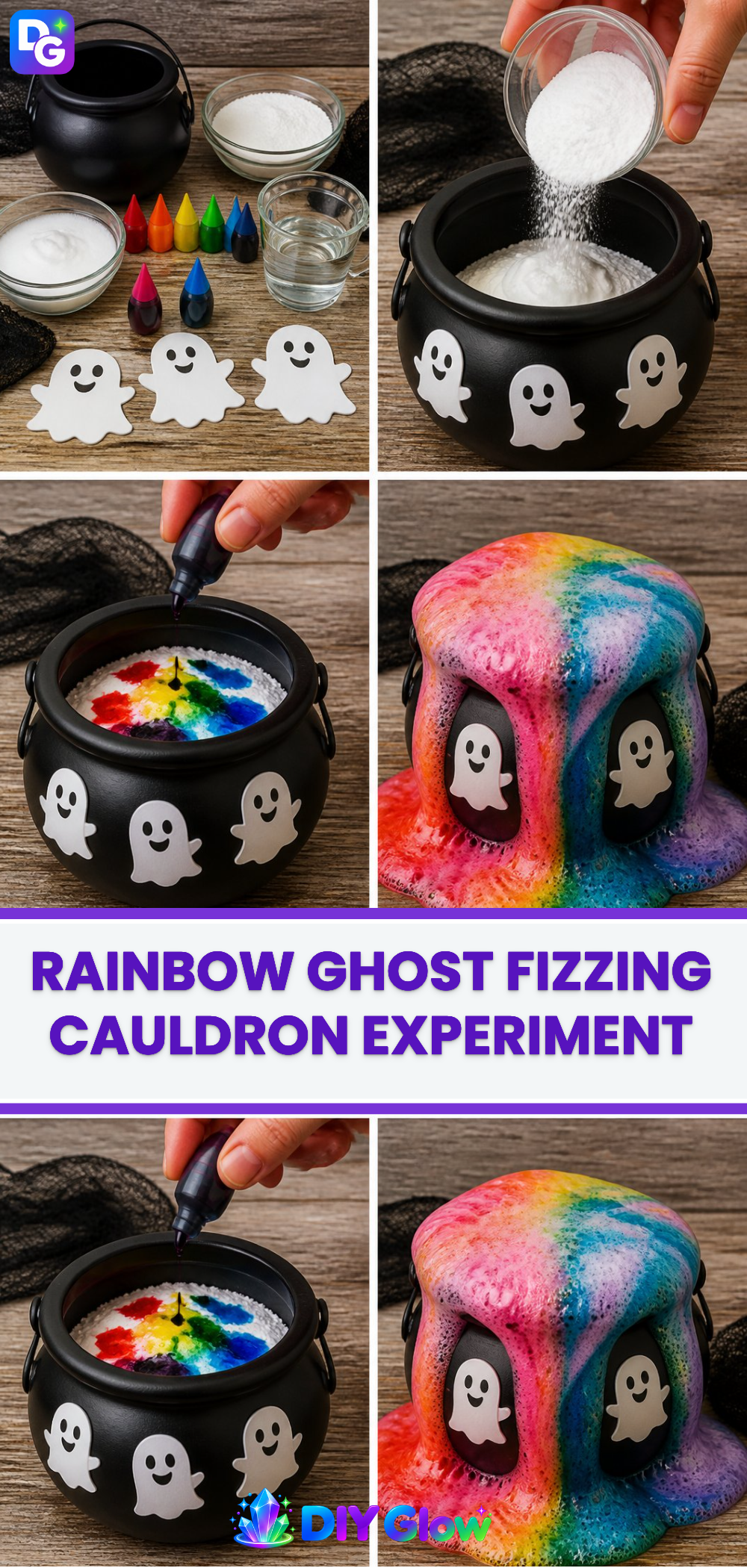
- Combine Ingredients in the Cauldron: Start by putting the baking soda into the cauldron. Add a small squeeze of dish soap. This creates an environment for the foam, making it thick and fluffy.
- Add Color: Next, add drops of the rainbow food coloring along with the pink and blue coloring. Watch how the colors blend and swirl together, creating a magical look.
- Decorate the Cauldron: Take time to decorate the outside of your cauldron with the friendly ghost cutouts. This adds extra fun and gives your project a festive appearance.
- Vinegar Activation: Carefully pour the vinegar into the cauldron. Adult supervision is recommended here. You’ll start to see the fizzing action as the ingredients react.
- Enjoy the Show: Now, watch closely as a thick, colorful ghost foam bubbles over the cauldron! This engaging visual display is sure to delight everyone participating.
What Goes Wrong and How to Fix It
Sometimes, things may not go as planned. If the fizz is not as vigorous as expected, check the freshness of your baking soda and vinegar. Old ingredients can affect the chemical reaction. If you find the foam too thin, try adding more dish soap to hold the bubbles better.
Another common issue might be the colors not mixing well. This can happen if they are added too quickly. Instead, try to add them slowly and watch how they blend, creating a beautiful pattern.
Where to Display It
Once your experiment is complete, find a great spot to display your cauldron. It can look fantastic on a windowsill, especially where the light can enhance the colors. For further decoration, consider creating a cupcake liner garland to hang nearby.

Variations
To keep the experiment fresh and exciting, think about varying your color choices. Try using only one color at a time for a different effect or mixing colors in unique combinations. You could also experiment with different types of molds or containers, like mini pumpkins or festive jars, for a themed display.
Additionally, replacing vinegar with lemon juice can create a different scent and alter the foam’s texture. Each variation can give a unique twist to the Rainbow Ghost Fizzing Cauldron Experiment.
FAQs
How do I store the cauldron after the experiment?
Once you finish, it’s best to clean out the cauldron with warm, soapy water. Store the cauldron dry and clean for future experiments.
Can I substitute vinegar with something else?
While vinegar is the best for this project, lemon juice can be a substitute. Just like vinegar, it will provide an acidic environment for the baking soda to react.
Why didn’t my cauldron fizz?
If your cauldron doesn’t fizz, check the freshness of your baking soda and vinegar. Old ingredients may not react as expected.
How long can I keep the foam?
The foam will last only a few minutes after the reaction starts but can be observed as it forms. It won’t hold its structure for long.
Can kids do this alone?
This project requires adult supervision, especially when pouring the vinegar, as the reaction can be a bit sudden.
How long does this take to set up?
The preparation and execution take about 15 to 20 minutes, making it a quick and fun experiment for family craft time.
Conclusion
The Rainbow Ghost Fizzing Cauldron Experiment is an excellent way to blend creativity and science at home. Families can have a blast while making it and learning about chemical reactions. If you’re looking for more seasonal DIY projects, be sure to check out Seasonal Cozy DIY and explore other festive fun like the Fizzing Cauldrons Halloween Science Experiment. Enjoy crafting!
Follow us on social for more DIY ideas & inspiration!

Rainbow Ghost Fizzing Cauldron
Would you like to save this project?
By submitting you agree to receive this project and occasional emails. Unsubscribe anytime.
Materials
Main ingredients
- 1 small Small plastic cauldron For holding the ingredients
- 1/2 cup Baking soda Reactant for the fizzing effect
- 1/2 cup Vinegar Provides acidity for the reaction
- 1 squeeze White foaming dish soap Helps to trap gas and create froth
- a few drops Rainbow food coloring For vibrant color effects
- a few drops Clear pink and blue coloring Enhances the color display
- as needed pieces Friendly ghost cutouts For decorating the cauldron
Directions
Preparation
- Put the baking soda into the cauldron.
- Add a small squeeze of dish soap to create a thick foam.
- Add drops of the rainbow food coloring along with pink and blue coloring.
- Decorate the outside of the cauldron with friendly ghost cutouts.
Activation
- Carefully pour the vinegar into the cauldron under adult supervision.
- Watch the fizzing action as the mixture reacts and creates a colorful foam.
- Enjoy the engaging visual display!
Last Step: Don’t forget to leave a rating and comment below! It helps other readers find the best DIY projects — and it helps us too!