
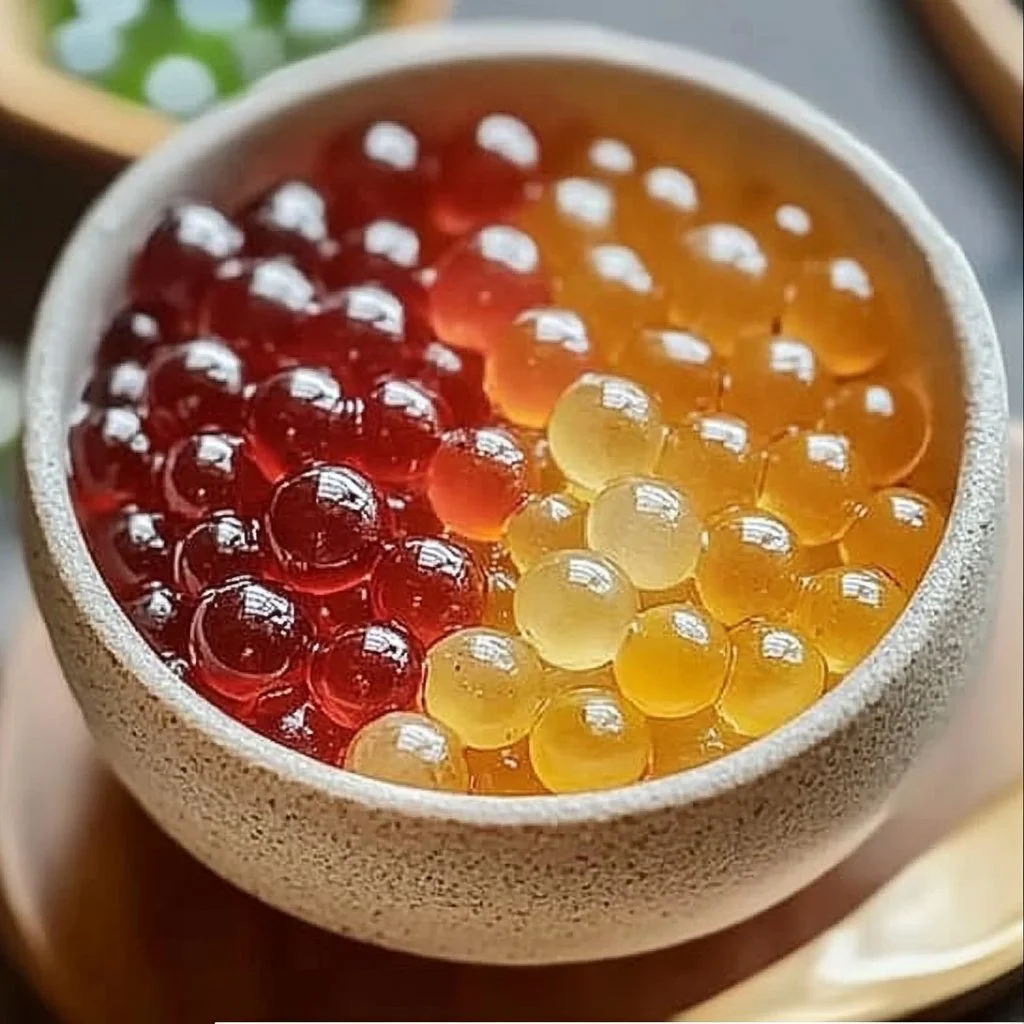
I love small, hands-on recipes that bring a little wonder to the table. How to Make Popping Boba at Home is one of those treats. It feels like a little kitchen magic. If you enjoy simple projects you can do with pantry items, you might also like this rainbow crystals project for a different kind of fun.
Why Make This How to Make Popping Boba at Home
Popping boba is playful and bright. Kids and grown-ups both smile when a tiny juice ball bursts. It is quick to make. The technique is gentle and forgiving. It also feels a bit old-fashioned, like learning a small craft from someone who has done it many times. If you like hands-on craft-style recipes, this is as satisfying as trying an eco suncatcher recipe in simplicity and joy.
How to Make How to Make Popping Boba at Home
This method uses a simple spherification trick. You make a juice mix with sodium alginate. Then you drop it into a calcium bath. The outside turns into a thin gel. The inside stays liquid. It only takes a few minutes per batch. If you want more kitchen experiments, try recipes like a bioplastic suncatchers recipe that also uses gentle chemical reactions to make something fun.
Ingredients
- 1 cup fruit juice (strained, no pulp)
- 1-2 Tbsp sugar or sweetener (optional)
- 1/2 tsp sodium alginate
- Optional: gel food coloring or flavored extracts
- 2 cups cold water
- 1 tsp calcium lactate or calcium chloride
- Extra cold water for rinsing
Directions
- In a bowl, mix your chosen fruit juice with sugar or sweetener until it’s dissolved.
- Stir in sodium alginate until fully blended.
- In another bowl, mix cold water with calcium lactate or calcium chloride for calcium bath.
- Using a squeeze bottle or dropper, drop your juice mixture into the calcium bath.
- Let them sit for a couple of minutes.
- Scoop them out with a fine mesh strainer or slotted spoon and rinse in cold water.
How to Serve How to Make Popping Boba at Home
Serve them chilled. Add them to iced tea, lemonade, or bubble tea. They also work well on top of yogurt or fruit salad. Use them within a few hours for best burst and flavor. Let people pop them with a spoon or use a straw for drinks.
How to Store How to Make Popping Boba at Home
Keep them cold in a sealed container. Rinse well before storing to remove excess calcium. Use within 24 hours for best texture. Over time the skin becomes thicker and the inside may leak.
Tips to Make How to Make Popping Boba at Home
- Use strained juice for a smooth finish.
- Work with cold ingredients. Cold slows the setting and gives a thinner shell.
- If you want stronger color or flavor, add gel coloring or a drop of extract.
- Drop from a low height for more uniform spheres.
- If you enjoy small craft-like kitchen tasks, try making colorful suncatchers like these blue crayon suncatchers on a different day.
Variations
- Watermelon or mango juice for tropical pops.
- Lemon or lime juice with a touch of sugar for tart pops.
- Mix two juices for layered flavor.
- Add a tiny drop of extract (vanilla, rose) for a subtle twist.
FAQs
Q: Can I use regular table salt instead of calcium?
A: No. Table salt will not create the gel shell. Use calcium lactate or calcium chloride.
Q: Is sodium alginate safe to eat?
A: Yes, in the small amounts used here it is food-grade and commonly used for spherification.
Q: How long will they last in the fridge?
A: Best eaten within 24 hours. The shells thin and the centers can leak after that.
Q: Can I make these without special tools?
A: Yes. A spoon or small measuring spoon can drop the juice mixture, though a squeeze bottle gives better shape.
Conclusion
If you want another step-by-step guide to compare techniques, see this Popping Boba Recipe: Easy DIY Watermelon Spherification for a clear example. For a different take and tips from another home cook, read How to make popping boba at home – Lovely Brusting Boba DIY.
Follow us on social for more DIY ideas & inspiration!
How to Make Popping Boba at Home
Would you like to save this project?
By submitting you agree to receive this project and occasional emails. Unsubscribe anytime.
Materials
- 1 cup fruit juice (strained, no pulp)
- 1-2 Tbsp sugar or sweetener (optional)
- 1/2 tsp sodium alginate
- Optional: gel food coloring or flavored extracts
- 2 cups cold water
- 1 tsp calcium lactate or calcium chloride
- Extra cold water for rinsing
Directions
- In a bowl, mix your chosen fruit juice with sugar or sweetener until it’s dissolved.
- Stir in sodium alginate until fully blended.
- In another bowl, mix cold water with calcium lactate or calcium chloride for calcium bath.
- Using a squeeze bottle or dropper, drop your juice mixture into the calcium bath.
- Let them sit for a couple of minutes.
- Scoop them out with a fine mesh strainer or slotted spoon and rinse in cold water.
Last Step: Don’t forget to leave a rating and comment below! It helps other readers find the best DIY projects — and it helps us too!