
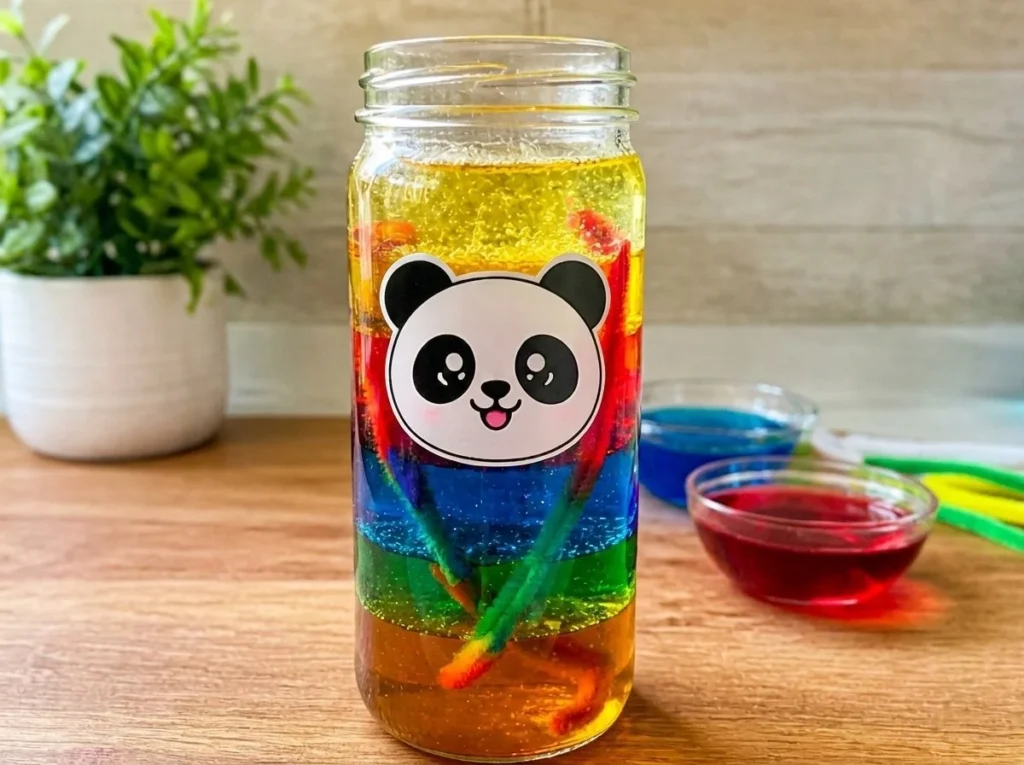
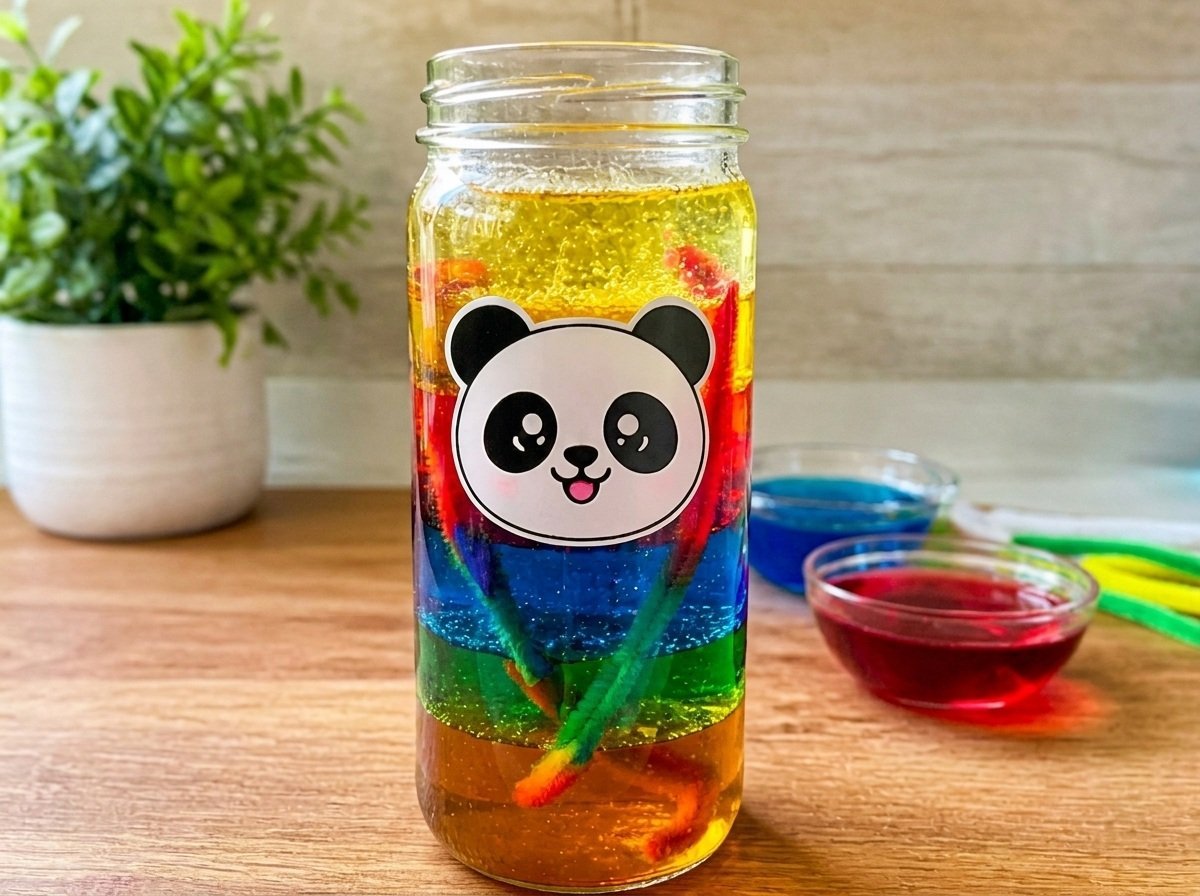
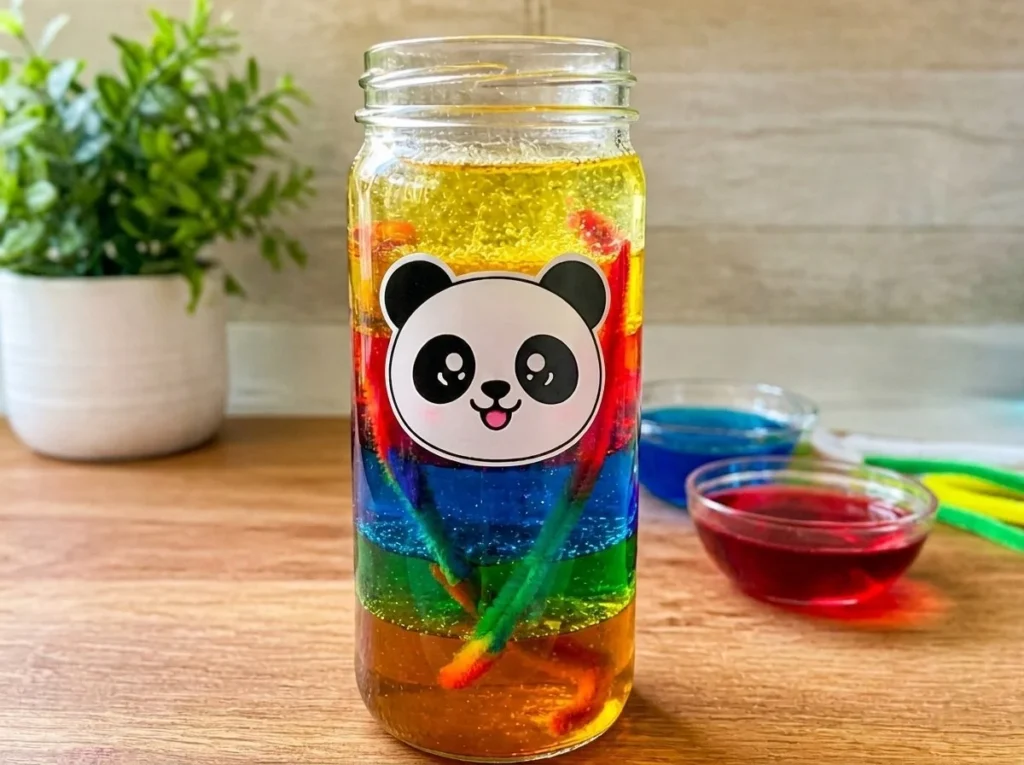
The Rainbow Panda Density Tower Experiment creates a stunning display of colorful layers that can catch the light beautifully. This craft project is a fantastic way to explore density and layering with materials that are safe and fun to use. Watching the colors separate and settle is an enjoyable process, and the end result is a vibrant decoration for your shelf or window. You may also find Back To School Rainbow Pencil Bouquet useful.
What Makes This Work
This experiment relies on the principle of density, which is the mass of a substance relative to its volume. When you pour different liquids into a jar, the denser liquids sink while the lighter ones float. This layering effect allows you to create a rainbow of colors that can sparkle in the light.
Materials
To create your Rainbow Panda Density Tower, you will need the following materials:
- Clear tall jar
- Honey
- Dish soap
- Colored water (using rainbow food coloring)
- Vegetable oil
- Rubbing alcohol (adult handling)
- Panda sticker
Steps
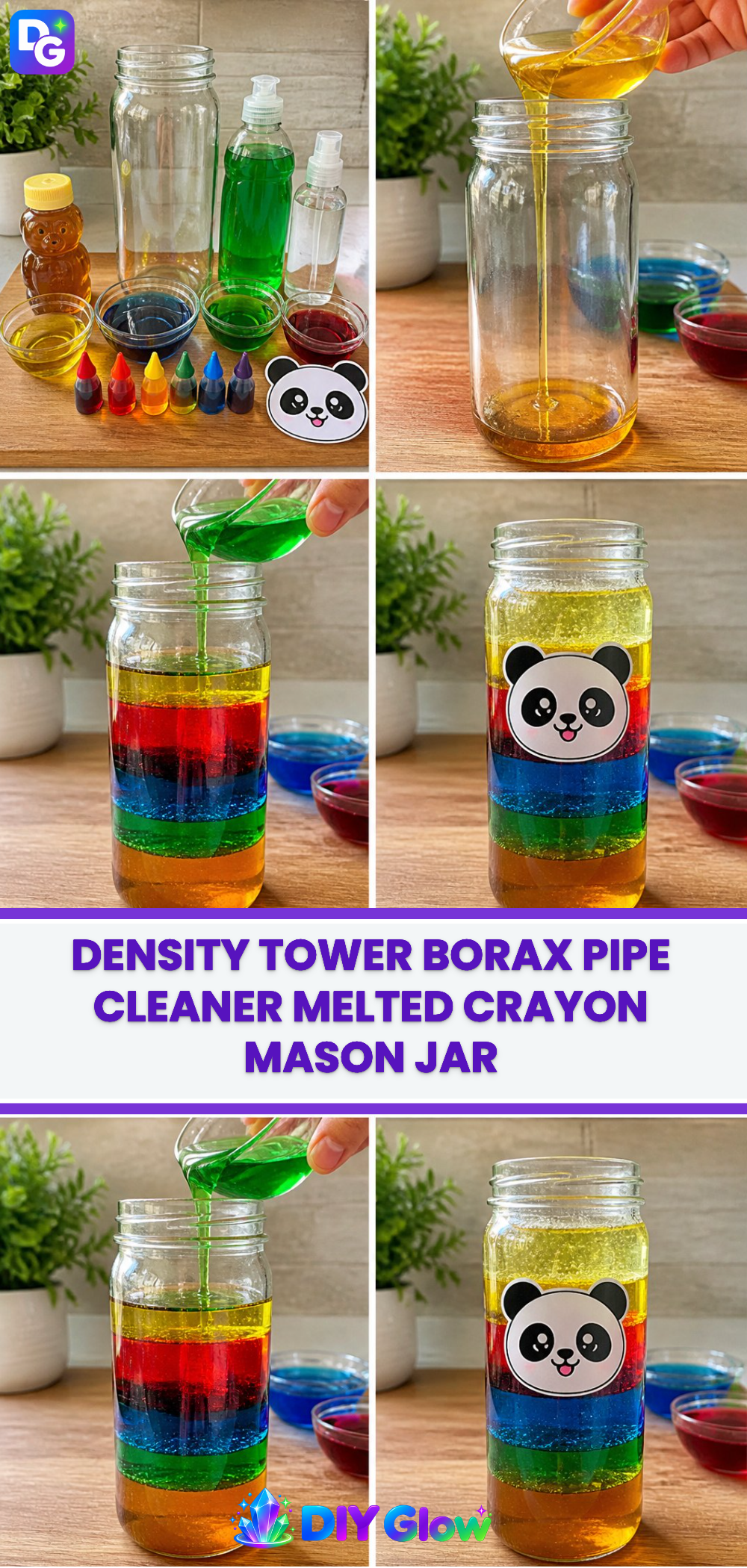
- Color the liquids: Begin by coloring the compatible liquids in contrasting rainbow shades. Use rainbow food coloring in the colored water and light, vibrant colors for the dish soap. This visual contrast makes it easier to see the layering effect.
- Pour the honey: Carefully pour the densest liquid, honey, into the jar first. This liquid should be at the bottom because it is the heaviest. Watch as it creates a rich golden layer.
- Add the dish soap: Gradually add each remaining liquid, gently down the side of the jar. Pour the colored dish soap next, making sure it does not disturb the honey layer. The soap is less dense than honey and will sit on top.
- Layer the colored water: Next, carefully add the colored water. Again, allow it to slide down the side of the jar gently, forming another layer. Notice how the colors pop and separate clearly.
- Finish with oil and alcohol: Now, pour in the vegetable oil. Its lighter density will cause it to float on top of the colored water. Finally, add the rubbing alcohol in the same gentle manner. Each liquid creates a distinct layer, showcasing a beautiful spectrum.
- Admire your creation: Allow the layers to settle completely and see the magic of density in action! Finish off by sticking a cute panda face on the jar, adding a delightful touch to your colorful creation.
What Goes Wrong and How to Fix It
Sometimes, layers can mix if poured too quickly. To prevent this, ensure you pour each liquid slowly and carefully. If your layers do not seem distinct, it may help to adjust the colors of your liquids; some colors are naturally closer in density than others. You can also try using different types of liquids to see how they behave. If you’re looking for more ideas for creative tasks, check out this fall leaf craft for kids.
Where to Display It
Once created, the Rainbow Panda Density Tower makes a lovely display piece. Place it in a well-lit area where the colors can shine. It can be a delightful addition to your craft corner or a fun science exhibit on a shelf, showcasing both beauty and educational value.
Variations
You can try variations by changing the types of liquids used. For instance, experiment with different colors and thicknesses of liquids. You might explore using flavored syrups for the coloring or try alternative household liquids to see how they layer. Each experiment can yield different results. If you’re looking for more organization ideas, consider making a pencil cup classroom organizer as a fun, complementary project.
FAQs
Can I use different types of liquids for this experiment?
Yes, you can experiment with various liquids, but ensure they have contrasting densities to achieve effective layering.
What should I do if my layers mix?
If the layers mix, it typically results from pouring too quickly. Try to pour more slowly next time or readjust the density of your liquids.
How long does it last?
The density tower can last indefinitely if kept in a stable environment out of direct sunlight and heat.
Can children participate in this experiment?
Yes, children can help with the coloring and layering but must be supervised when handling the rubbing alcohol and any glass materials.
Why is my oil mixing with the water?
If the oil mixes with the water, it could be due to not pouring gently enough. Always pour it down the side of the jar to minimize mixing.
How long will the colors stay vibrant?
The colors can stay vibrant for a long time, but it’s essential to avoid exposing your tower to too much light or heat, which may cause fading.
Conclusion
Creating a Rainbow Panda Density Tower Experiment is not just an entertaining craft; it also teaches an important scientific principle. You can enhance your learning experience by exploring similar exciting crafts, like a density tower experiment from KiwiCo or a colorful diving rainbow DIY project found at KiwiCo. Embrace the fun of DIY projects while enjoying the wonders of science!
Follow us on social for more DIY ideas & inspiration!
Rainbow Panda Density Tower
Would you like to save this project?
By submitting you agree to receive this project and occasional emails. Unsubscribe anytime.
Materials
Materials
- 1 each Clear tall jar A tall, transparent jar for better visibility of layers.
- 1/2 cup Honey The densest liquid, placed at the bottom.
- 1/2 cup Dish soap Colored in vibrant hues for contrast.
- 1/2 cup Colored water Use rainbow food coloring for this.
- 1/2 cup Vegetable oil Lighter than water, will float on top.
- 1/4 cup Rubbing alcohol Handled by adults only.
- 1 each Panda sticker For decorative purposes after completion.
Directions
Preparation
- Color the liquids with contrasting rainbow shades using food coloring.
- Carefully pour the honey into the clear jar first to create the bottom layer.
- Gradually add the colored dish soap next. Pour it gently down the side of the jar to avoid mixing.
- Next, add the colored water carefully, again letting it slide down the jar's side.
- Pour in the vegetable oil, allowing it to float atop the water.
- Finally, add the rubbing alcohol gently to form the topmost layer.
- Allow the tower layers to settle and then place the panda sticker on the jar for decoration.
Last Step: Don’t forget to leave a rating and comment below! It helps other readers find the best DIY projects — and it helps us too!