
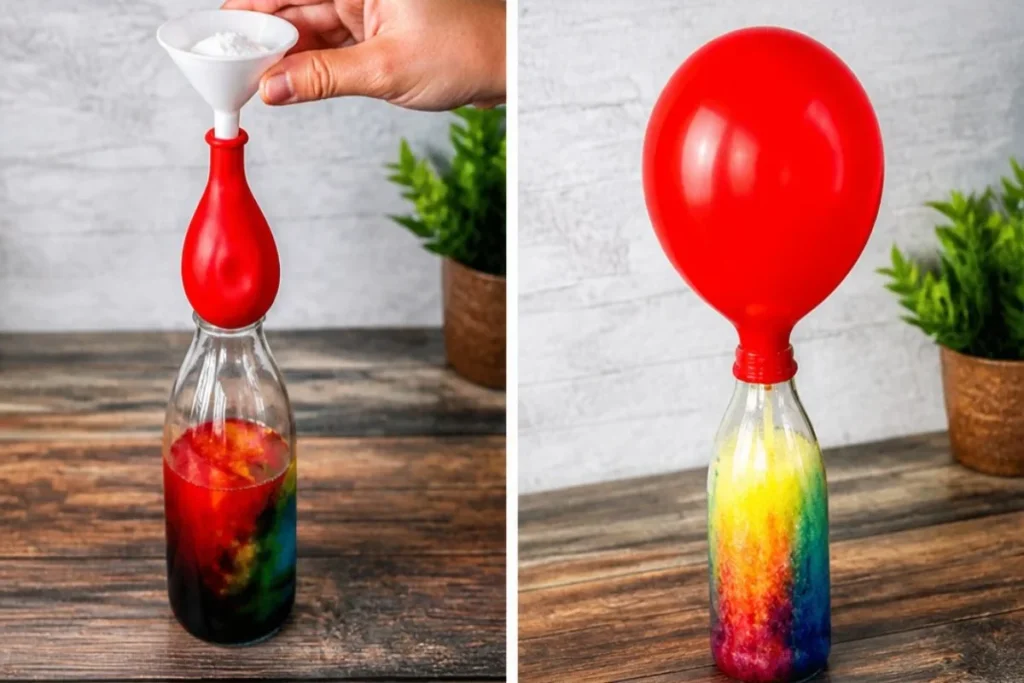
The Balloon Self-Inflating Rainbow Experiment is a captivating project that showcases a colorful transformation as you create it. Once the baking soda and vinegar mix, you will see the balloon inflate, providing a demonstration of a chemical reaction in action. This engaging experiment not only teaches kids about science but also adds a splash of color to your space. You may also find Balloon Baking Soda Experiment Grows Cozy useful.
What Makes This Work
This experiment works due to a reaction between baking soda (a base) and vinegar (an acid). When these two materials combine, they produce carbon dioxide gas. This gas builds up inside the balloon, causing it to inflate. The addition of food coloring enhances the visual effect, turning the whole process into a vibrant activity. For more festive ideas, check out our article on creating a rainbow pencil bouquet.
Materials
Gather the following materials before you begin: You may also find Balloon Baking Soda Experiment See Cozy useful.
- Clear bottle
- Balloon
- Baking soda
- Vinegar
- Food coloring
- Funnel
Steps
Gather all the materials and set up a clean work area. Collect everything you need for this colorful experiment. A tidy space maximizes safety and creativity. You may also find Baking Soda Rainbow Crystal Forest Rainbow Crystals useful.
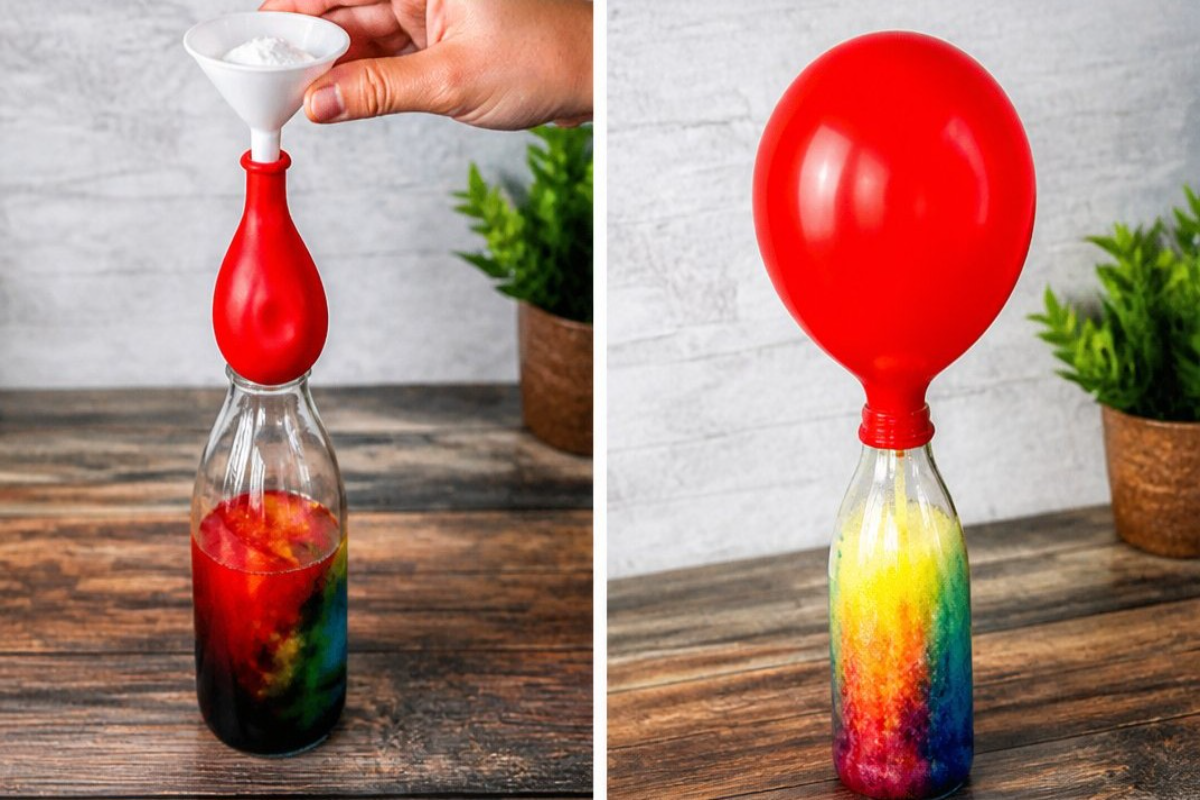
Tint the vinegar with food coloring and pour it into the bottle. Pick your favorite color, add it to the vinegar, and watch the transformation as you pour the mixture into the bottle. It will look striking and inviting.
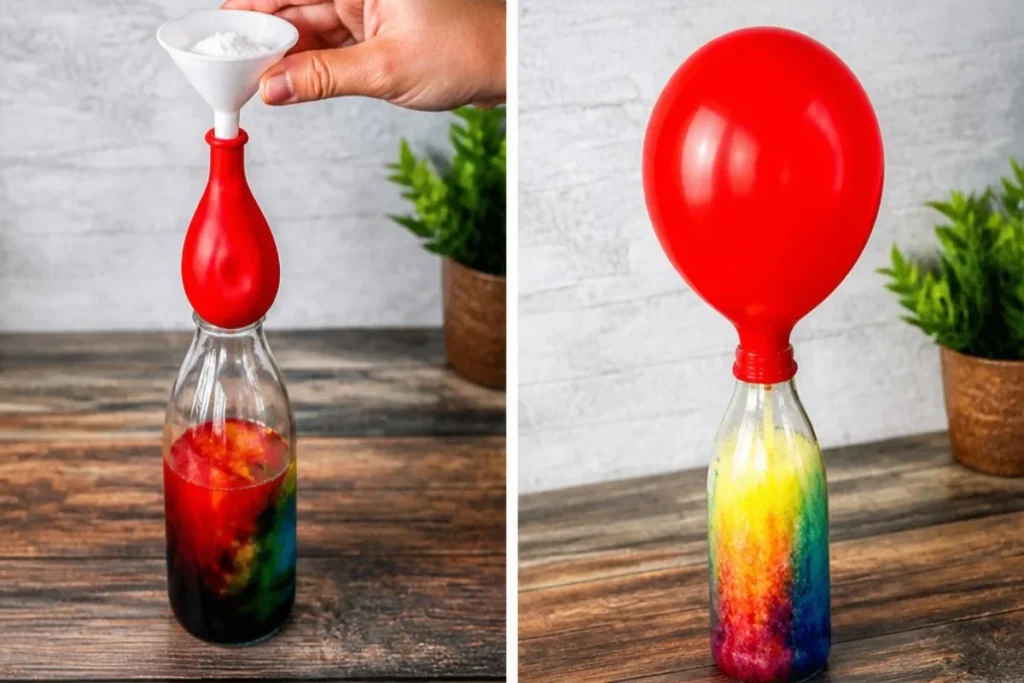
Use the funnel to fill the balloon with baking soda. Carefully position the funnel inside the balloon and add the baking soda. This step is essential for the success of the reaction as too much or too little can affect inflation.
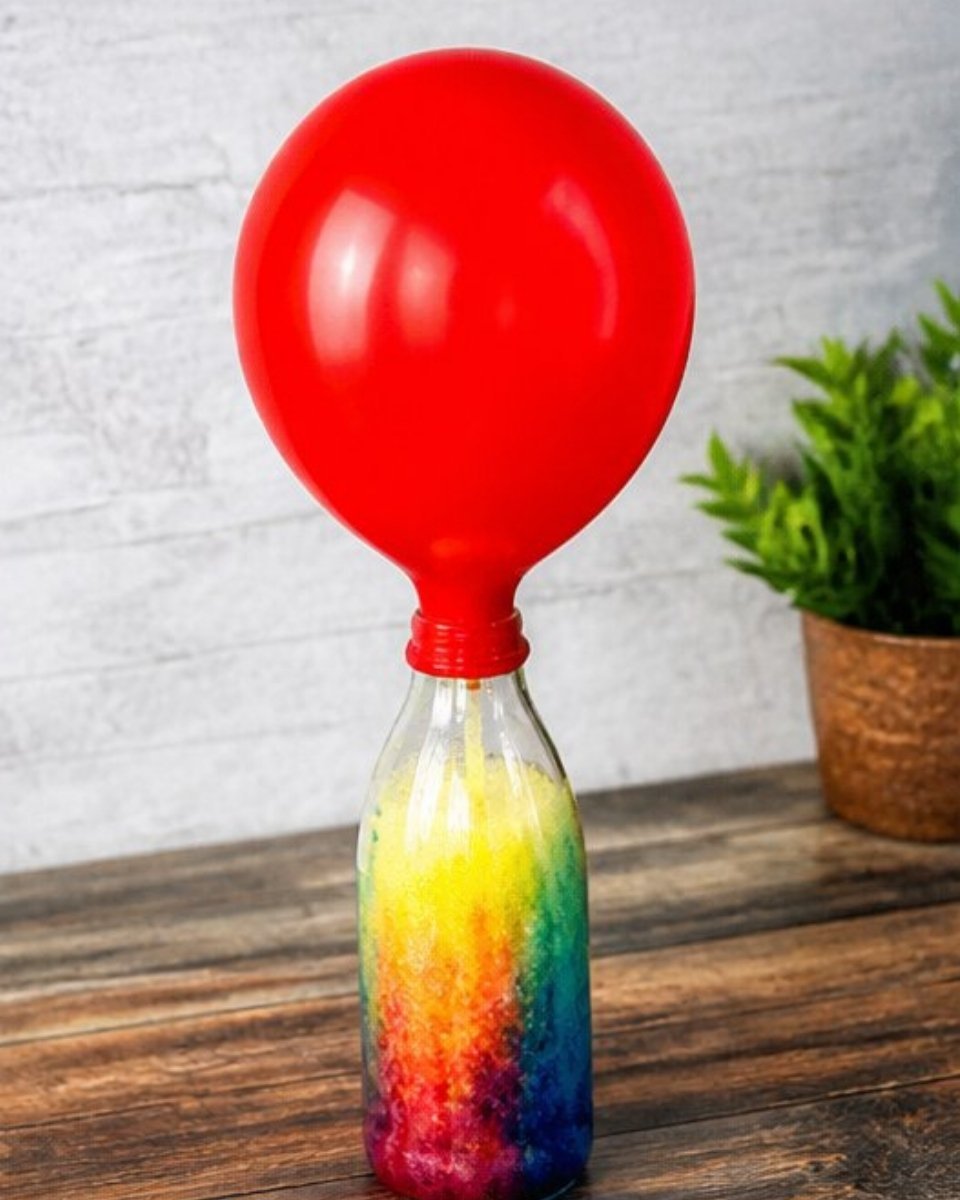
Carefully attach the balloon to the bottle, then lift it to let the baking soda fall in. As the baking soda combines with the vinegar, keep an eye on the balloon. It will inflate rapidly, displaying the colors of the vinegar you tinted.
This step should be done carefully, as the buildup of gas might cause the balloon to pop if all safety measures are not followed.
What Goes Wrong and How to Fix It
Sometimes, the balloon may not inflate as expected. This could happen if the balloon isn’t attached properly or if there isn’t enough vinegar in the bottle. To troubleshoot, ensure the balloon is securely fitted and check the amounts of baking soda and vinegar used. Adjust accordingly and try again for a second round of colorful fun.
Where to Display It
After completing the experiment, place your balloon on a shelf or in a window where it can catch the light. The vibrant colors will brighten up any room. If you’re looking for more colorful crafts, explore our glowing rainbow crystals project which also celebrates light and color.
Variations
You can modify the basic experiment to create more scientific explorations. Try different colors of food coloring or even add glitter for a sparkling effect. Mixing different vinegar types, such as apple cider vinegar or flavored vinegar, can yield delightful results. Experiment with various balloon sizes for comparative studies on gas production.
FAQs
How can I make the balloon inflate faster?
To increase the rate of inflation, ensure that you use a larger amount of vinegar. This creates more gas quickly. Also, check for any leaks around the balloon attachment.
What happens if my balloon pops?
If the balloon pops, don’t worry this can happen if too much gas builds up. Always monitor the reaction, and consider using a larger balloon for better safety.
Can I reuse the materials for another experiment?
Although the vinegar and baking soda reaction cannot be reused, you can save the bottle and funnel for future projects. Just clean them thoroughly after each use.
Is this safe for young children to do?
Yes, this experiment is safe for children with adult supervision. Always ensure adults conduct the pouring of vinegar and baking soda, especially if handling any broken glass or balloon pieces.
What is the best place to perform this experiment?
Conduct this experiment in a well-ventilated area. A kitchen or a backyard would be ideal, as spills can occur.
How long does the balloon stay inflated?
The balloon can stay inflated for a while, but the gas will eventually escape. It’s best observed shortly after the reaction.
Conclusion
The Balloon Self-Inflating Rainbow Experiment is not just a colorful project; it’s a way to engage with the science behind chemical reactions. You can explore more exciting experiments like the baking soda and vinegar balloon experiment or check out the hands-free balloon inflating tutorial for additional fun activities. Happy experimenting!
Follow us on social for more DIY ideas & inspiration!
Balloon Self-Inflating Rainbow Experiment
Would you like to save this project?
By submitting you agree to receive this project and occasional emails. Unsubscribe anytime.
Materials
Materials
- 1 piece Clear bottle To hold the vinegar and the reaction
- 1 piece Balloon To inflate during the experiment
- 1 tablespoon Baking soda Essential for the chemical reaction
- 1/2 cup Vinegar React with baking soda for inflation
- a few Food coloring To color the vinegar
- 1 piece Funnel To assist in filling the balloon
Directions
Setup
- Gather all the materials and set up a clean work area. A tidy space maximizes safety and creativity.
Preparing the Vinegar
- Tint the vinegar with food coloring and pour it into the bottle.
Filling the Balloon
- Use the funnel to fill the balloon with baking soda.
Inflating the Balloon
- Carefully attach the balloon to the bottle, then lift it to let the baking soda fall in.
Last Step: Don’t forget to leave a rating and comment below! It helps other readers find the best DIY projects — and it helps us too!