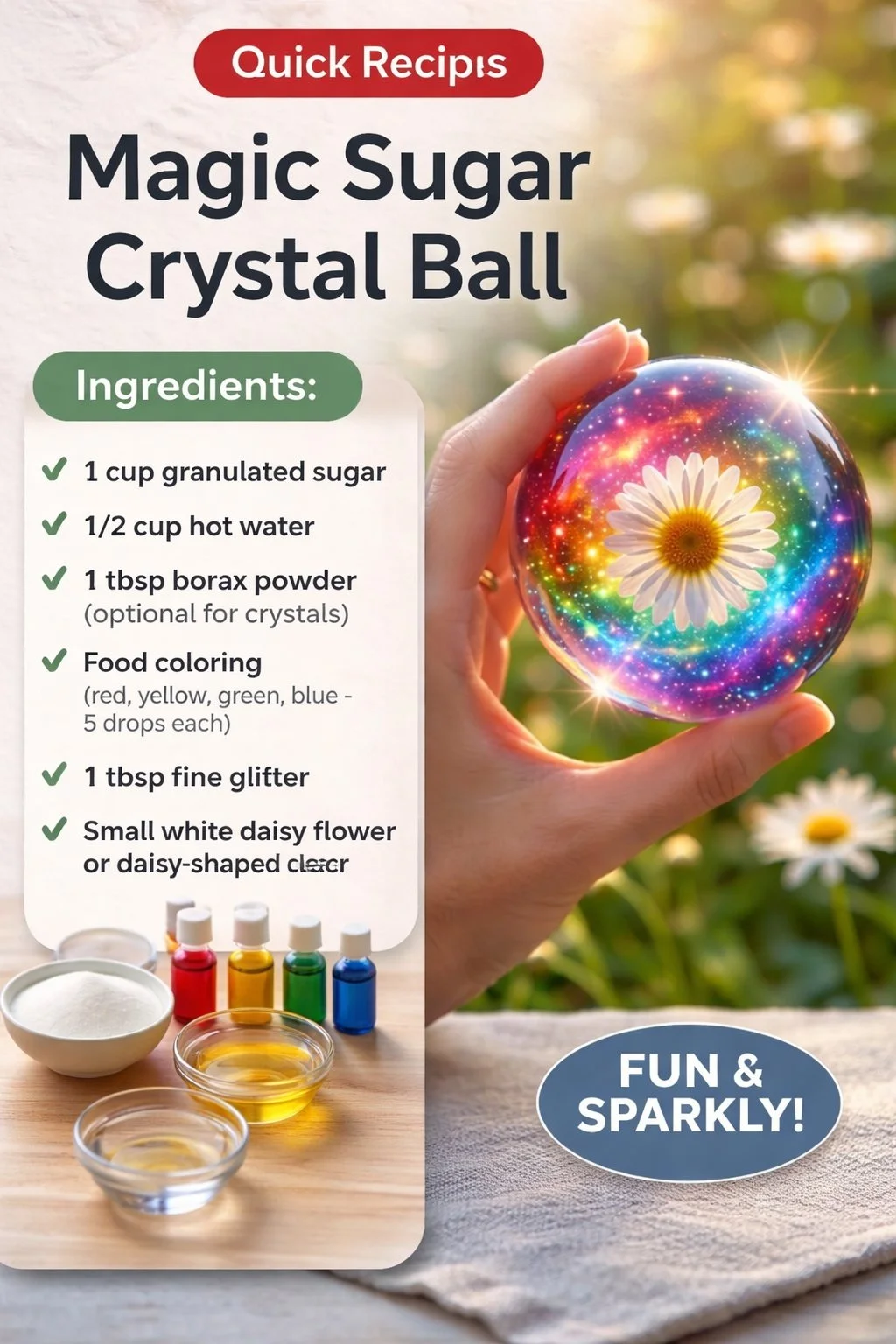
Would you like to save this recipe?
By submitting you agree to receive this recipe and occasional emails. Unsubscribe anytime.
Materials
- Granulated sugar, a large amount for a dense, clear crystal (easy to find)
- Water, clean and room temperature
- A heavy-bottomed saucepan for even heating (recommended for safety)
- A candy thermometer or an accurate kitchen thermometer (helps control temperature)
- Clear glass or plastic spheres or small round molds (optional: glass gives the most sparkle)
- Wooden skewers or string to seed crystal formation (string is easy to handle)
- A spoon or spatula for stirring
- A measuring cup and scale if you like precision
- A heatproof bowl or jar to hold the syrup as it cools
- Food-safe glue or a small clamp if attaching a seeded string to the sphere
- A small funnel or steady hand for filling the sphere
- A mesh or fine strainer to remove impurities (optional)
- Protective gloves and a towel for handling hot containers (safety first)
- A quiet, dry space to set the spheres and wait for growth (no drafts)
Instructions
- Prepare your workspace and tools. Set a clean, dry work area. Lay a towel to catch spills. Place your sphere or mold where you can pour comfortably. Wear gloves if you prefer.
- Measure water and sugar. Use one cup of water for every two cups of sugar as a starting point. Weighing is helpful if you want repeatable results. This ratio gives a supersaturated solution that encourages crystal growth.
- Heat gently while stirring. Combine water and half the sugar in the pan and warm slowly. Stir until the sugar dissolves and the liquid looks clear and steady. Notice the gentle steam and the scent of warming sugar.
- Add the remaining sugar gradually. Keep the heat low to medium. Add the rest of the sugar in small scoops while stirring. The solution will thicken and become syrupy. Use the thermometer to aim for a gentle holding temperature around 115 to 120 degrees Celsius if you are aiming for a thicker syrup; lower temperatures still form crystals but may take longer.
- Remove from heat and skim. As the syrup cools just slightly, skim away any foam or stray crystals on the surface with a spoon. A clear surface helps the interior crystal growth stay clean and glassy.
- Seed your string or skewer. Tie a short length of string around a wooden skewer or use a skewer on its own. Dip the string briefly into the syrup or roll it in a small amount of sugar. This seeding creates a rough place for crystals to begin forming.
- Fill the sphere or mold carefully. Use a funnel or steady pour to fill the glass sphere with the warm syrup. Leave a small opening so you can lower the seeded string or skewer into the center. The warm weight of the syrup feels dense and smooth in the glass.
- Place the seed in the center. Lower the seeded string or skewer so it hangs in the center without touching the sides. Balance the skewer across the top of the sphere or clamp a string gently in place. The seed anchors the crystals and guides growth toward the center.
- Cool and wait in a quiet spot. Set the filled sphere somewhere still and dry. Close windows to avoid drafts. Listen for small settling sounds as the syrup cools. Check daily for tiny, glittering points of crystal.
- Observe growth and be patient. Crystal growth often begins along the string or near the walls. You will see tiny facets spread outward like frost. Resist moving the sphere too often. The best growth comes from stillness.
- Finish and gentle dry. When crystals reach the size you like, remove the skewer or string slowly and let the opening dry. If you used a mold, you may need to carefully unclip or separate it. Pat with a soft cloth and let the piece dry in a calm space.
- Seal if you wish and display. If you plan to keep the crystal ball in a place with minor humidity, consider sealing the opening with food-safe glue or a small cork. This step helps keep the interior dry and stable.
Last Step: Don’t forget to leave a rating and comment below! It helps other readers find the best recipes — and it helps us too!