Would you like to save this recipe?
By submitting you agree to receive this recipe and occasional emails. Unsubscribe anytime.
Materials
- Jar or glass container, clear and clean (easy to find)
- Heatproof bowl or saucepan for mixing warm water
- Spoon for stirring, wooden or stainless steel
- Measuring cup (optional)
- Crystal-forming substance: choose one Alum powder (clear, forms bright faceted crystals)
- Borax (fast, snowflake-like crystals; not for ingestion)
- Sugar (for edible rock candy; gentle and familiar)
- Baking soda (softer, interesting textures; optional)
Instructions
- Prepare your workspace and jar. Lay down a paper tray to catch spills and choose a clear jar so light can enter.
- Warm water until hot but not boiling. The water should feel very warm to the touch. Pour it into a heatproof bowl.
- Add your chosen substance slowly while stirring. Watch the powder disappear into the water. Keep stirring until it looks nearly clear.
- Test saturation. Add small pinches of the substance until no more will dissolve and a thin film or tiny crystals begin to form in the bottom when the solution cools a little.
- Let the mixture settle a few minutes, then skim any solids from the surface. Pour the clear solution into your jar with a steady hand.
- Prepare a string or pipe cleaner shape. Tie the string to a clothespin or rest the pipe cleaner on chopsticks so it suspends in the middle of the jar without touching the sides.
- Place the suspended armature into the jar. Adjust so it hangs freely. Cover the jar loosely with a paper towel to keep dust out while letting air exchange.
- Move the jar to a calm spot with indirect light. Avoid windowsills with heavy drafts or direct sun. Crystals grow best in stable conditions.
- Check the jar daily. You will see tiny nodules at first. If a crust forms on the surface, gently remove it with a spoon to keep the interior growth clean.
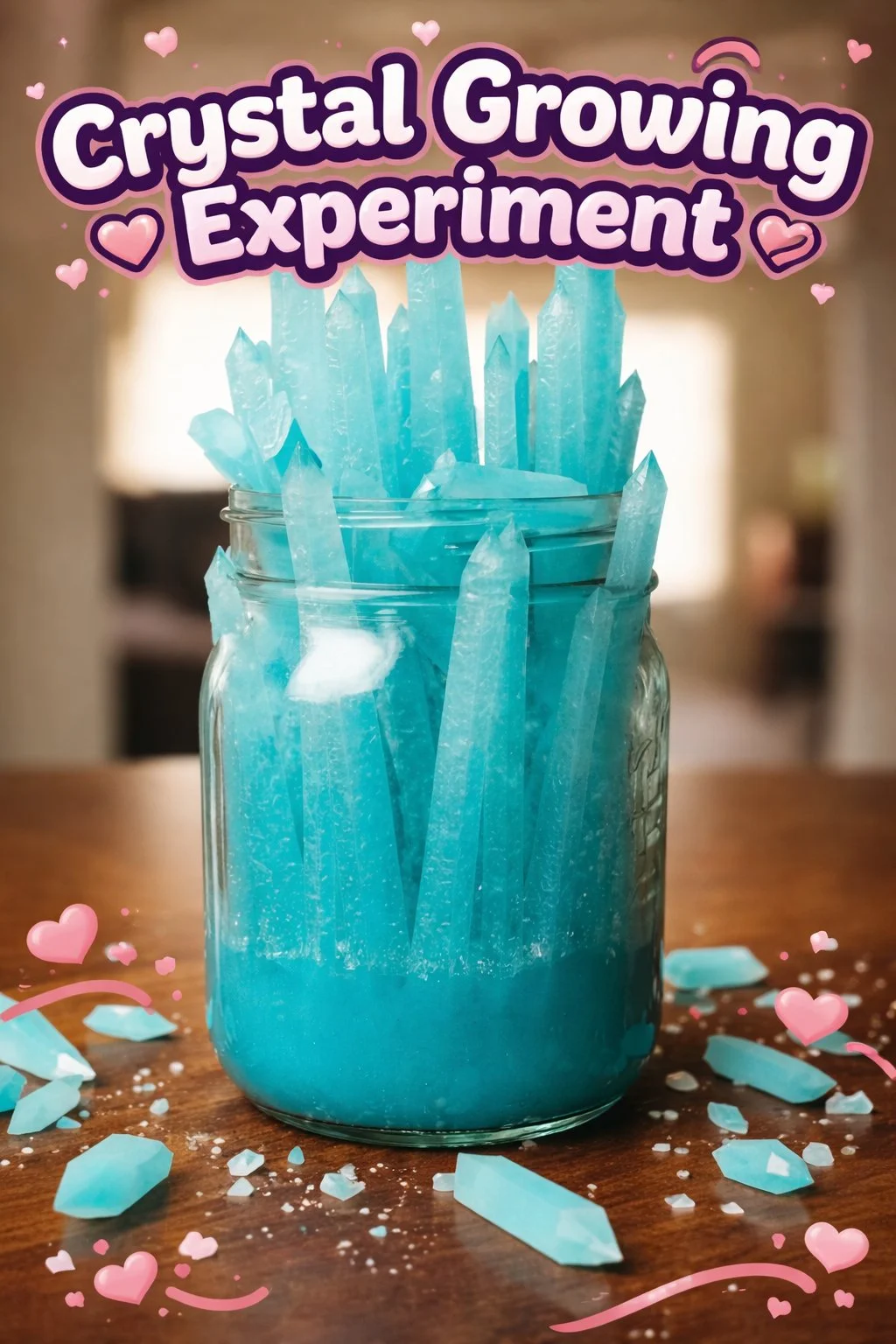
- After several days to a week, lift the armature carefully. Rinse gently with cool water to remove loose crystals. Let the finished piece dry on a paper towel.
- If you like, repeat the process to grow additional layers. For layered growth, re-suspend the dried piece in fresh solution and allow it to build more facets.
- Record what you notice in your notebook. Note smells, temperatures, and the pace of growth. These small observations help you learn for the next gentle experiment.
Last Step: Don’t forget to leave a rating and comment below! It helps other readers find the best recipes — and it helps us too!