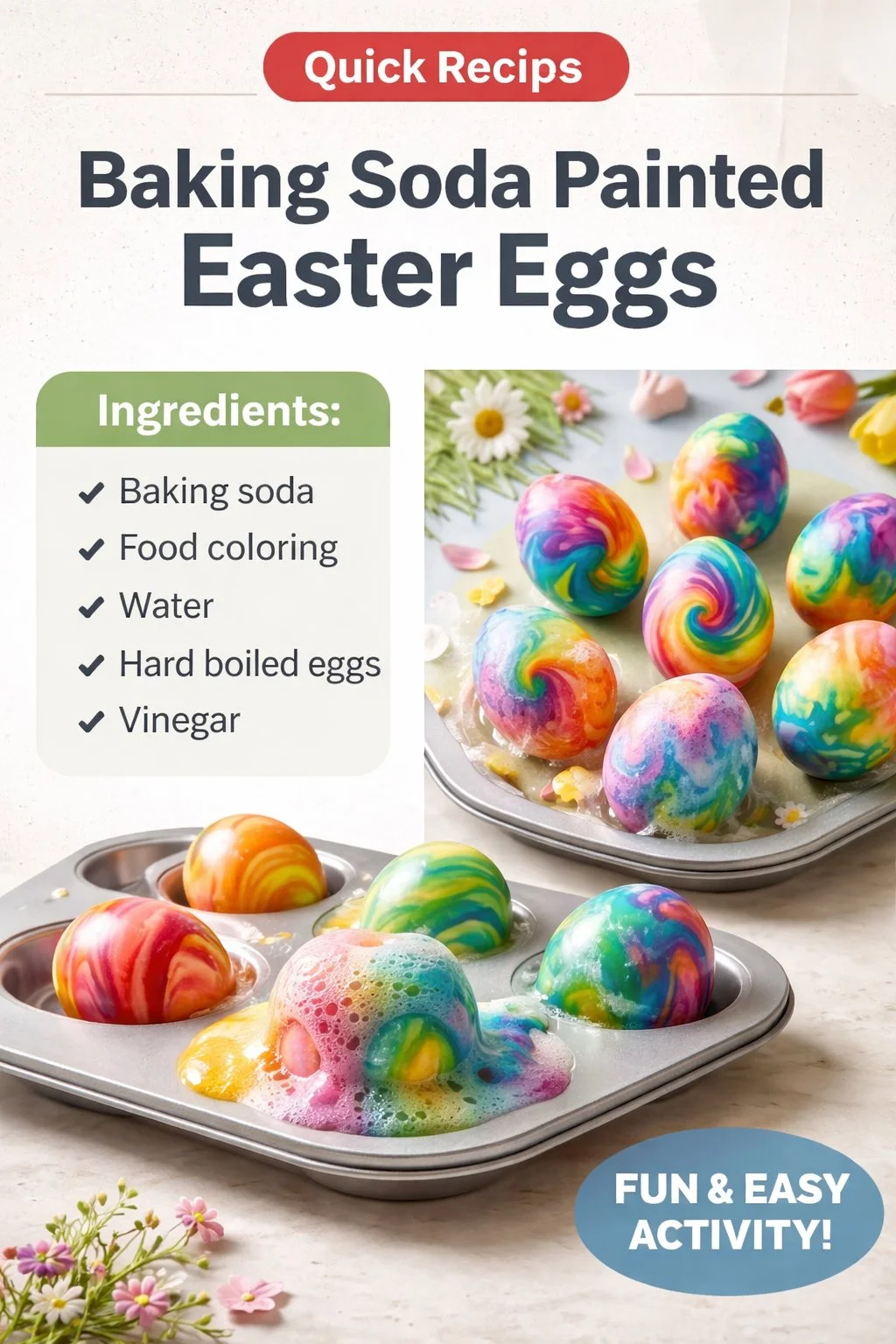
Would you like to save this recipe?
By submitting you agree to receive this recipe and occasional emails. Unsubscribe anytime.
Materials
- Eggs (hard-boiled for eating, or blown shells for keepsakes)
- Baking soda (easy to find)
- White vinegar (mild, safe)
- Liquid food coloring or liquid watercolors (choose soft colors)
- Small jars or cups for mixing
- Pipettes or droppers (optional, for gentle control)
- Soft paintbrushes (small round brushes work well)
- Measuring spoons
- Paper towels or a cloth (for tidy work)
- A tray or shallow box to catch drips
- Gloves (optional, if you prefer to keep your hands color-free)
- A drying rack or egg carton with soft padding
Instructions
- Prepare your eggs with gentle care. Hard-boil eggs if you plan to eat them later, or blow them out for long-term decoration. Pat shells dry and set them on a soft towel. Handle slowly so they do not crack.
- Make a baking soda paint: mix one tablespoon of baking soda with a little water until you get a smooth, slightly thick paste. The texture should feel silky and spreadable on a spoon.
- Create colored vinegar drops: pour white vinegar into jars and add a few drops of liquid food coloring or liquid watercolor. Swirl gently. The color will sit in the vinegar and fizz when it meets baking soda.
- Paint a base layer if you like a soft, chalky ground. Use a small brush to apply the baking soda paste in thin strokes. Let it rest for a minute; the paste dries to a velvety matte.
- Use a dropper or pipette to place colored vinegar drops onto the baking soda paste. Watch the tiny fizz and the pigment move. Pause between drops to enjoy the moment and decide where to place the next one.
- For a softer marbled look, mix a little baking soda into a thicker, paint-like slurry and tint it with color. Brush that on in gentle curves, then add a few vinegar drops for subtle texture.
- If you prefer speckles, flick a brush loaded with colored vinegar near the shell and let tiny droplets meet the baking soda. You will hear faint taps and see speckles bloom.
- Allow eggs to dry undisturbed. The drying phase feels important. The paste sets and the colors soften. If you used hard-boiled eggs, keep them refrigerated until you plan to eat or display them.
- Once dry, decide on finishing touches. You can leave the surface matte, seal it with a light wax if you want a soft sheen, or softly buff with a dry cloth to warm the color. Take a breath and admire each small surface.
Last Step: Don’t forget to leave a rating and comment below! It helps other readers find the best recipes — and it helps us too!