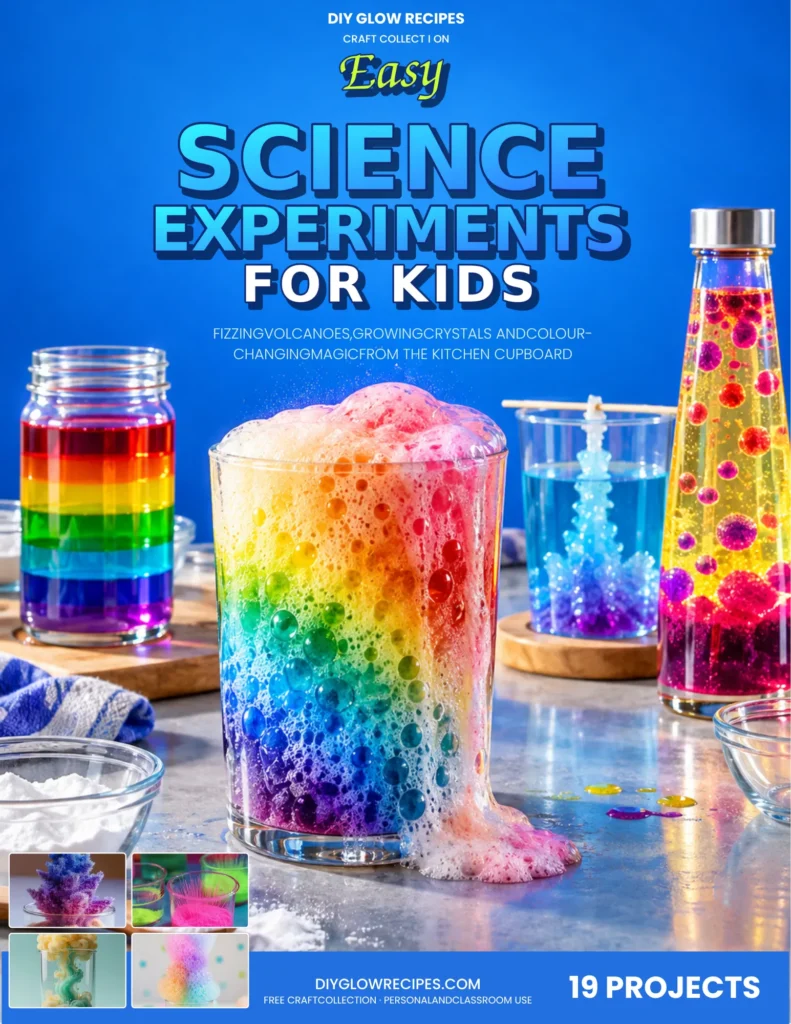

Every project here is a real experiment with a visible result, and almost all of it comes out of the kitchen cupboard. This free collection gathers 19 easy science experiments for kids that work with baking soda, vinegar, sugar, oil and food colouring.
There are volcanoes that erupt across a tray, lava lamps built in a bottle, sugar crystals that grow on a string over a week, eggs that turn marbled in vinegar, and foam that climbs out of a jar faster than anyone expects.
They suit rainy days, school holidays and science-fair weekends — and because the supply lists are short, you can usually decide to do one and be doing it ten minutes later.
What's Inside This Free eBook
- 19 experiments, one per page, with materials, numbered steps and what to watch for
- Fizzing acid-and-base reactions in several different forms
- Density experiments including lava lamps and layered jars
- Crystal growing using sugar, salt and baking soda
- Colour-mixing and colour-separation activities
- Notes on which steps an adult should take and how to contain the mess
Easy Science Experiments Kids Can Run Themselves
The best kitchen experiments have a moment where something obviously happens. Every project in this collection has one: a colour changes, a jar overflows, a shape appears overnight.
That matters more than complexity. A child who pours the vinegar themselves and watches the reaction start is doing the experiment; a child watching an adult assemble something is watching a demonstration.
Science Experiments With Baking Soda and Vinegar
The acid-and-base reaction turns up here in several forms, which is useful — running two versions back to back shows that the same reaction can look completely different depending on what you add to it. Dish soap turns it into foam. Sugar changes how it flows. Food colouring makes the movement visible.
Do these on a tray or a covered table. The good ones make a mess, and that is rather the point.
Growing Crystals and Slow Experiments
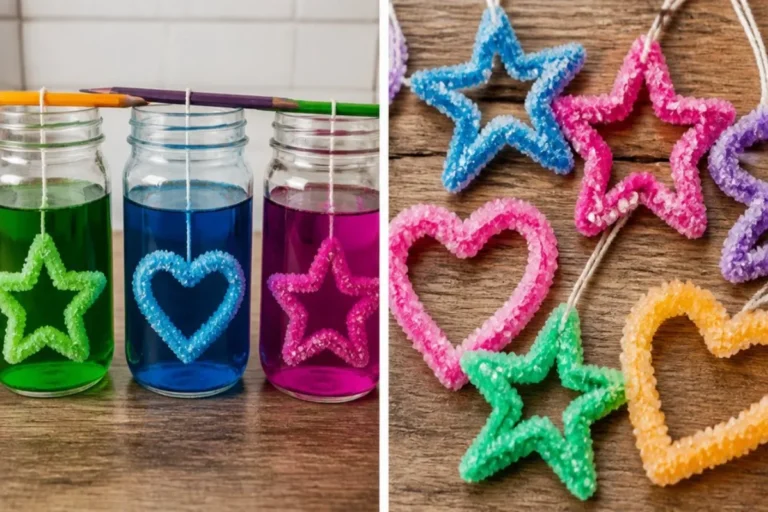
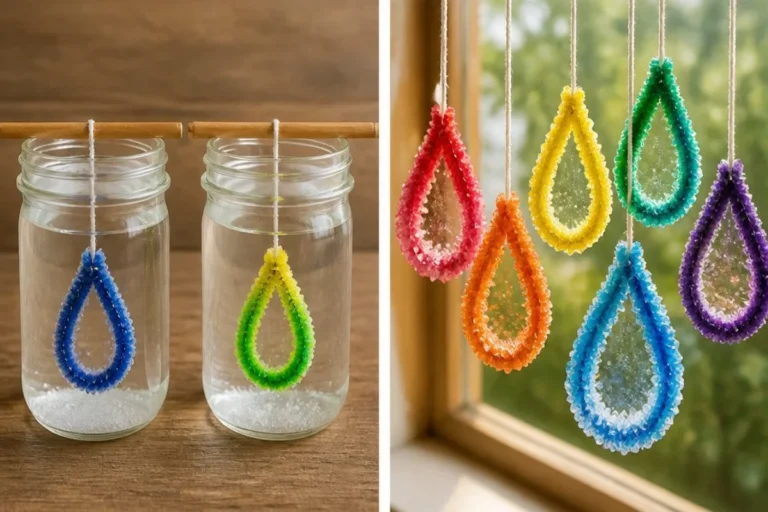
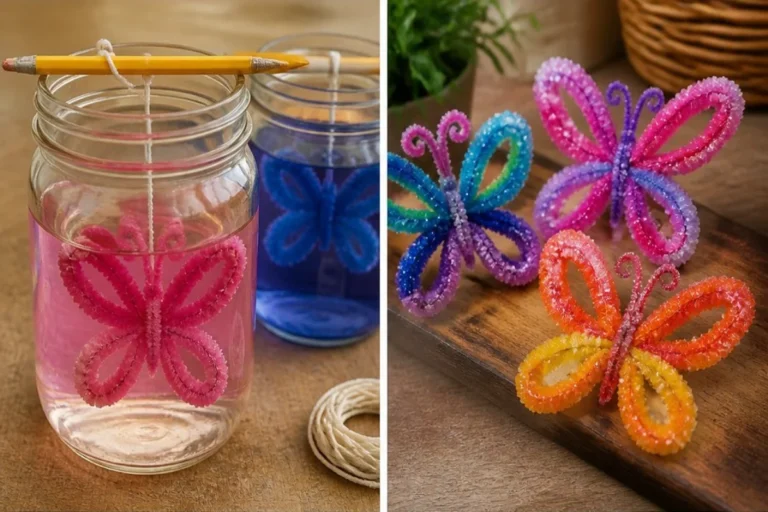
A few projects run on a longer clock. Sugar crystals on a string take days. Baking soda shapes take a night. These are worth including precisely because they teach a different lesson from the instant reactions — that some results need to be left alone.
A Peek at the Projects Inside
Fizzing Salt Volcano — Salt, baking soda and vinegar in a clear container, so you can watch the eruption from the side rather than only from above.
Color Burst Foam Eruption Science Experiment — Baking soda, vinegar and dish soap combined so the reaction traps air and climbs out as coloured foam.
First-Day Rainbow Pencil Lava Lamp — Oil, water and food colouring in a clear bottle. A fizzing tablet sends coloured blobs rising and falling.
Rapid-Growing Sugar Crystals — A saturated sugar solution and a seeded string. Crystals build over several days into a solid rock-candy shape.
Marbled Easter Eggs with Oil & Vinegar — Oil floating on coloured vinegar leaves a marbled pattern on the shell as the egg is lifted through it.
Rainbow Fall Leaf Color-Changing Chromatography — Marker ink separates into its component colours as water travels up a coffee filter.
Magic Cool Ice Cubes — Coloured ice cubes melting into water, showing how the colours spread and mix at different rates.
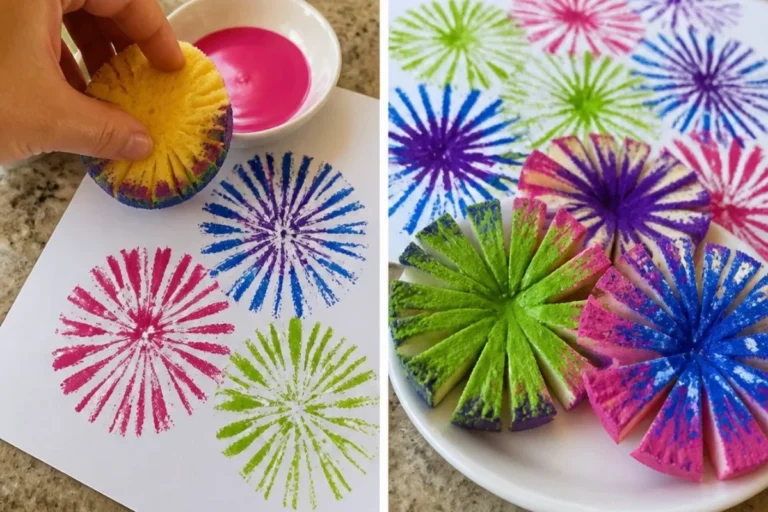
Rainbow Kitten Bubble-Foam Science Lab — Water, dish soap and paint whipped into stiff coloured foam that can be piled up and printed with.
Baking Soda Growing Tree — A cardboard tree standing in a saturated baking soda solution. The liquid climbs the branches and dries into a crust of white crystals.
Sugar Spell-Craft Rainbow Magic Volcanoes — Sugar added to the usual baking soda and vinegar reaction, which thickens the foam and slows the eruption down enough to watch properly.
Materials You Will Use Most
Baking soda, white vinegar, granulated sugar, table salt, vegetable oil, dish soap, food colouring, coffee filters and a set of clear jars or bottles cover nearly the whole collection. A tray to work on is the one thing worth adding.
Who These Experiments Suit
Most experiments suit elementary-age children doing the pouring, stirring and measuring themselves. Several make good science-fair starting points because the variable is easy to change — swap the sugar for salt, change the temperature, alter the ratio.
Boiling water, stove-top heating and borax belong to an adult. Borax appears in a small number of crystal projects and is a laundry product, not a food ingredient — keep it out of reach and follow the label. Nothing in this collection should be tasted unless the page says it is a food recipe, and a few of them are.
Get the Free Science Experiments eBook
The complete guide brings all 19 easy science experiments for kids into one downloadable PDF, with a page for each experiment, the full materials list, numbered steps and notes on what should happen so you can tell whether it worked.